

Does a “revamped” bonus feature actually improve your chances?
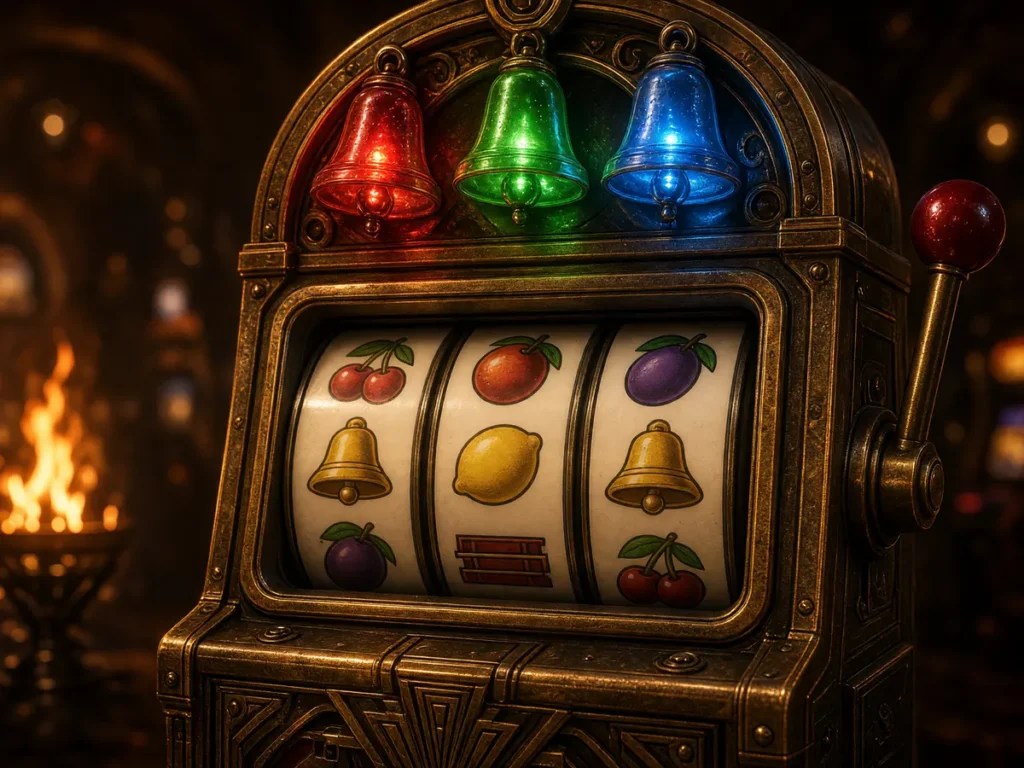
No. Adding features to a Hold and Win game changes how wins are shaped, not how much the game returns. That distinction sits at the centre of 3 Roaring Bells: Hold and Win, Playson’s fruit-machine-themed release built around three new Special Bell features and four in-game jackpots. The announcement promises “sweltering win potential”. What it describes is a redistribution of outcomes, which is a different thing, and worth separating before you load the game.
Here is what is genuinely new, what is standard for the format, and what the press material leaves out.
How does the hold and win mechanic normally work?
In a standard Hold and Win slot, landing a set number of bonus or coin symbols triggers a respin round in which those symbols lock in place while the rest of the grid keeps spinning. Each new bonus symbol that lands resets the respin counter, usually back to three. The round ends when the respins run out or the grid fills, and jackpot prizes are tied to filling positions or to landing specific jackpot symbols.
That format has been copied across the industry for years because it works on retention: the locked symbols give the player a visible, countable sense of progress, and the respin reset creates near-miss moments. Playson calls the mechanic “retention-proven” in its own announcement, which is an unusually candid way of describing the appeal. It is a player-engagement design before it is a payout design.
What do the Special Bells change in 3 Roaring Bells?
Multi-coloured Bells that land during the main game are collected by matching Bells positioned above the reel set, and when one or more Special Bells land, bonus play can be triggered along with one or more of three features. The colour of the Special Bell determines which feature fires.
- Red Special Bell triggers Expand, which adds two extra rows to the game field.
- Green Special Bell triggers Double, which marks four cells on the grid; symbols landing in those positions have their values doubled. If Expand is active at the same time, six cells are marked instead of four.
- Blue Special Bell triggers Extra, which applies inside the Bonus Game rather than to the base reels.
On the Extra Feature I will be straight with you: Playson’s announcement begins describing its effect on the Bonus Game and the published copy available to me does not complete the sentence. I am not going to infer what it does from the name, because “extra” could mean extra respins, extra symbols, or extra positions, and those three are not equivalent in value. Read it in the game’s own help screen before you decide the feature matters to you.
The combination rule is the part worth noticing. Expand and Double stacking, with the marked-cell count rising from four to six, means the features are designed to compound rather than fire in isolation. That is where the volatility in this release comes from.
How does it compare to the Hold and Win slots you already know?
Most of the structure is familiar. The modifications sit on top of it.
| Element | Typical Hold and Win title | 3 Roaring Bells: Hold and Win |
|---|---|---|
| Trigger | Set number of bonus or coin symbols | Bells collected above the reels; Special Bells can trigger bonus play |
| Grid size | Fixed throughout | Two extra rows added when the Expand Feature fires |
| Symbol values | Fixed per symbol | Doubled in four marked cells, six when Expand is also active |
| Jackpots | Commonly three or four tiers | Four in-game jackpots |
| Theme | Varies widely | Classic bells and fruit-machine styling |
Stripped of the marketing, the innovation is modest and specific: a bigger grid and a value multiplier applied to named cells, both gated behind random Special Bell landings. That is a real change to how a winning round can escalate. It is not a change to the fundamental loop.
What are the four in-game jackpots, and what are they not?
They are in-game jackpots, which means the prize tiers are defined within this title and paid as multiples of the stake rather than accumulating from a shared pool across operators. The phrase matters. Fixed, in-game tiers behave predictably and are already accounted for in the game’s return figure. A progressive prize funded by a slice of every bet, by contrast, grows until someone hits it and moves the game’s effective return around over time.
If you want the difference set out properly, our explainer on how linked jackpot networks differ from fixed jackpot tiers covers the mechanics and what each type does to your realistic odds. For 3 Roaring Bells, treat the four jackpots as top prize tiers in the paytable, not as a pool that someone else’s losses are inflating on your behalf.
What the announcement does not tell you
Three numbers decide whether a slot suits you, and none of them appear in the release: RTP, volatility, and maximum win. Playson, like most suppliers, leads with features because features are what a supplier sells to operators. Features are also the thing players can see in a trailer.
Return to player is the long-run share of total wagers a game pays back, averaged over millions of rounds; the remainder is the house edge. Adding Expand and Double does not raise that figure on its own. The maths designer sets the target return first and then balances the features to reach it, which usually means something else in the paytable gets trimmed to pay for the exciting part. A game with more ways to escalate and the same RTP is a game where more of the return has been shifted into rarer, bigger outcomes. That is higher volatility, and it means longer stretches of nothing between the moments the trailer shows you.
Several operators also publish multiple RTP configurations for the same title, so the figure in the game’s info panel at one casino is not guaranteed to match another. Check the panel in the client you are actually playing, not a review.
What I would and would not do with this release
I would not judge a Hold and Win title by how many features it stacks. The feature count is the easiest thing for a supplier to add and the least informative signal of what the game returns. A four-feature slot at 94% pays less over time than a plain one at 96.5%, and no amount of expanding grids changes that arithmetic.
What I would do, in this order: open the paytable and find the RTP and the stated volatility; check how many Bells are needed to start the Bonus Game and how many respins it grants; look at whether the jackpot tiers are reachable at your stake level or only at the higher bet steps, because some designs gate the top tier behind bet size. If you are new to a supplier’s catalogue generally, the same checks apply, and our guide on what to verify before playing a new slot provider’s titles runs through licensing and RTP verification in more detail.
Playson has built a genuinely clean piece of design here, and the Expand-plus-Double interaction gives the bonus round a structure that classic Hold and Win formats lack. Whether that is worth your money depends on a number the announcement does not publish. Find it before you spin, set a deposit limit you would be content to lose in full, and treat the four jackpots as what they are: the rarest line on the paytable, not the expected outcome.