

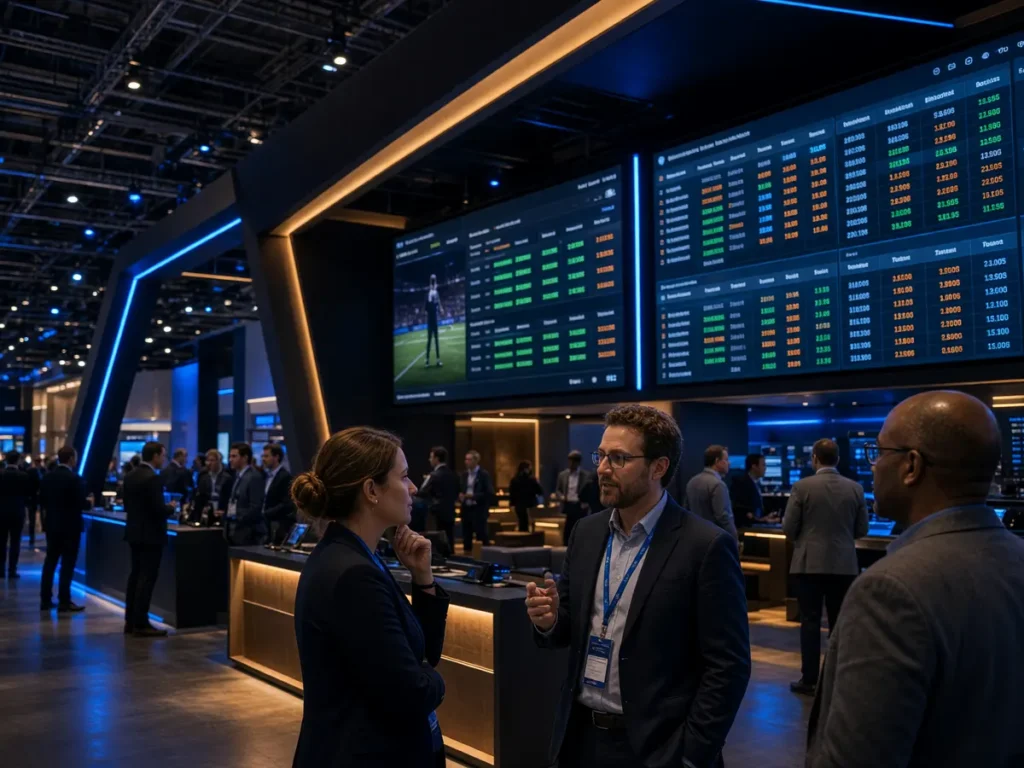
Stands H4-4042 and H4-4043, Rome, 3 to 5 November. That is where BetConstruct AI says it will put five new sportsbook engagement tools and a lottery platform called BetNuma in front of operators at SiGMA World 2026, according to the company’s press release. Read the announcement carefully and a gap opens between the label and the product: AI sportsbook technology is doing real, measurable work in betting right now, mostly in real-time pricing and in-play market generation, but almost none of that work is what this particular stand list describes.
That gap is worth sitting with, because it is the same gap most “AI in betting” coverage skips over. The interesting question is not whether a vendor has put AI in its name. It is which layer of the sportsbook the models have actually reached, and which layer still runs the way it did five years ago.
What BetConstruct AI is showing at SiGMA World 2026
The company is exhibiting five new sportsbook engagement tools, named in the release as Sport Reel, Lucky Boost, Power Bank, Jet Shop and Stake, alongside its in-house lottery ecosystem BetNuma. The commercial side of the exhibit is anchored by a partner promotion the company calls “The Purest Sportsbook Offer,” which it says is valid until 1 October 2026.
Two things about the context matter more than the names. First, SiGMA World is a business-to-business event: the audience is operators, platform buyers and affiliates, not bettors. Nothing here ships to a punter’s phone next week. It is a sales conversation with a product roadmap attached.
Second, the announcement summary lists those five tools by name without describing the mechanics behind each one. That is normal for a pre-show release, and it is also the reason no honest write-up can tell you how any of them price a market, personalize a feed, or interact with a trading desk. Anyone who tells you otherwise is filling in blanks the source left empty.
BetNuma is a lottery ecosystem, not a live-odds engine
BetNuma, per the company, is an in-house lottery ecosystem that manages all retail operations without third-party draw feeds. That is a lottery and retail distribution product, not a sportsbook pricing tool, and the distinction is the whole story of the misreading that tends to follow announcements like this one.
The removal of third-party draw feeds is the substantive claim. A lottery operator that licenses draw results from an external supplier is paying for that dependency twice: in fees, and in the integration risk of having settlement hang on someone else’s uptime. Owning the draw layer end to end means the operator controls scheduling, result publication and retail reconciliation under one roof. It is the same logic that pushes operators toward owned game content rather than licensed feeds elsewhere in the industry, including the growth of licensed virtual sports products that operators can run on their own schedules.
That is a real operational gain, and it is the vendor’s own framing. It has not been independently verified, and “manages all retail operations” is the kind of scope claim that only survives contact with an actual retail estate. Treat it as positioning until an operator says otherwise.
Where AI genuinely changes live betting tools
The real AI work in sportsbooks sits in in-play pricing, where a model reprices dozens of markets within seconds of a change in match state. This is the layer bettors interact with constantly and almost never see, and it is why the live betting menu looks nothing like it did a decade ago.
From static prices to dynamic, generated markets
Pre-match odds are compiled slowly, change rarely, and are the same for everyone looking at the screen. In-play pricing is the opposite problem. A goal, a red card, a break point, a wicket: each one invalidates every open market at once, and the book has to requote or suspend within a second or two. Machine learning models trained on historical event sequences do that requoting automatically, consuming a live data feed and outputting new prices without a trader touching each one.
Micro-betting markets exist only because of that automation. Markets on the next point, the next corner, the next delivery have a lifespan measured in seconds; no human compiler can open, price, suspend and settle them at volume. The same machinery drives cash-out, which is nothing more exotic than a continuous revaluation of an open bet at the current model price, minus the operator’s margin on the buyout.
Personalization is where the language gets slippery. Most of what ships today is merchandising: the model decides which markets surface at the top of your in-play screen based on what you have bet before. Individually varied prices for the same selection are a different proposition entirely, and one that runs into fairness and regulatory objections fast. When a vendor says “personalized odds,” it is worth asking which of the two they mean, because the first is a recommendation engine and the second is price discrimination.
What changes on the trading desk
For operators, the shift moves traders from pricing to supervision. Instead of compiling markets, a trading team sets risk parameters, monitors model confidence, handles suspensions on ambiguous match events, and intervenes when liability concentrates on one outcome. The models handle volume; the humans handle exceptions and the cases where the feed and reality disagree.
The honest caveat: automated pricing does not remove the margin, it applies it faster and across more markets. A sportsbook’s overround is still built into every price, and the shorter-lived the market, the harder it is for a bettor to judge whether the price was fair. More markets quoted more quickly is good for liquidity and good for the book’s hold. It is not, by itself, good for the person betting into them.
Why AI branding is on the stand sign now
Platform providers are competing for the same finite pool of operator contracts, and sports betting innovation is the differentiator they can show on an exhibition floor. A pricing model is invisible; five named engagement features and a lottery platform are demonstrable in a twenty-minute stand meeting. Trade shows reward what can be shown.
There is a second, less cynical reading. Vendors that renamed themselves around AI have, in several cases, genuinely rebuilt their pricing and risk stacks around models, and the branding reflects where their engineering budget went. Both readings are defensible. On this specific lineup, the more sceptical one fits better: engagement tools are retention mechanics, and the release does not tie any of them to pricing, risk or market generation. The AI story in sportsbooks is real, but it is mostly happening a layer below anything a stand number can advertise.
Reading BetConstruct AI’s showcase as an operator or a bettor
For operators, the question to put to any vendor pitching this stack is which layer the automation touches and what it replaces. A retention tool that lifts engagement and a pricing engine that widens the in-play menu are different purchases with different risk profiles, and bundling them under one three-letter label makes due diligence harder, not easier.
For bettors, the practical effect of model-driven live betting is more markets, faster suspensions and a cash-out button that reprices continuously. The upside is a smoother in-play experience. The caveat is that every one of those markets carries the house margin, and personalization decides which of them you see first.
That last point is where responsible gambling stops being a footnote. A system that learns which markets a person responds to can just as easily learn which person responds when they are chasing losses. Regulators have already started asking that question, and the scrutiny of AI-driven betting marketing is the clearest signal of where the line will be drawn. Personalized market feeds should surface relevance, not exploit vulnerability, and any operator deploying them needs deposit limits, session reminders and self-exclusion wired into the same data layer that drives the recommendations.
One data point, not a turning point
What the Rome showcase actually evidences is narrower than the headline suggests: a platform provider bringing engagement features and a vertically integrated lottery product to a B2B audience, under an AI-branded name. The deeper shift toward model-priced in-play markets is real and is happening at most large sportsbooks, but it is not what this stand list proves. The open question, and the one no press release will answer, is whether “personalized” in a sportsbook means the markets you are shown or the prices you are offered. Operators signing these contracts should get that in writing.