

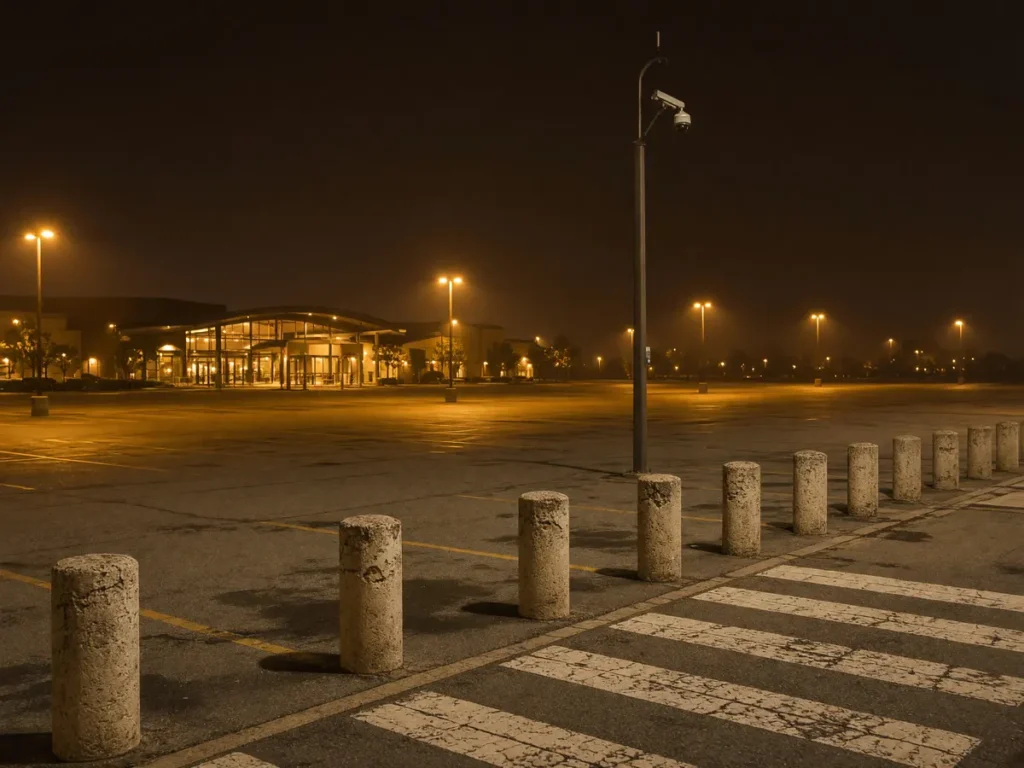
Shortly before midnight on Saturday 27 September 2025, gunfire broke out near a crosswalk outside an entrance to the Kickapoo Lucky Eagle Casino in Eagle Pass, Texas. Seven people were shot. Two died: Alicia “Daniela” Sanchez, 32, a mother of five from Carrizo Springs who was walking to her car, and Marcus “Mark” Antley, 66, a retired US Customs and Border Protection officer. Five more were taken to hospitals in Eagle Pass and San Antonio. Inside, witnesses described patrons diving under tables and running for exits. The property was unusually busy that night because of a promotional raffle with a Mercedes-Benz E350 and cash prizes on offer, which tells you something useful about how casino security measures are planned and where they stop.
Keryan Rashad Jones, 35, of San Antonio, has been charged with capital murder of multiple persons, murder, and aggravated assault with a deadly weapon. He has pleaded not guilty and remains in custody on $5.1 million bail. Everything that follows treats him as accused, not convicted.
The misreading worth correcting
The surveillance system in a licensed casino is built first to protect the money and the integrity of the games, and only second to protect the people walking through the building. That is the single most useful thing to understand about gaming floor security, and most casual visitors have it backwards.
Camera density follows cash. The highest concentration of coverage in any regulated property sits over the table games, the cage, the count room and the slot ticket redemption kiosks, because a gaming regulator typically requires recorded, reviewable footage of transactions and game play. Surveillance departments in many jurisdictions are deliberately walled off from the operations side and answer up a compliance chain, not to the pit boss. The staff watching those monitors are trained to spot chip dumping, past posting, card counting, employee theft and the specific tells of a dealer and a player working together.
Ask that same system to anticipate a shooting at a crosswalk at 11:50pm and you are asking it to do a job it was not designed, staffed or positioned for. The cost of believing otherwise is small but real: people relax in the car park because they assume the eye in the sky extends to it, and that is exactly the zone where the assumption is weakest.
How the layers are actually drawn
Land based casino risk management is organised in rings, and the rings are not equally resourced. The table below describes the conventional layered model used across the industry, and what each layer is genuinely optimised for.
| Layer | Primary objective | Typical measures |
|---|---|---|
| Outer perimeter and car park | Deterrence, property crime, traffic flow | Lighting, patrols, camera poles, vehicle barriers and bollards |
| Entrances and kerbside | Access control, age and ID checks | Door staff, ID scanners, exclusion list checks, metal detection at some venues |
| Gaming floor | Game integrity, dispute resolution, theft | Overhead cameras on tables and machines, floor supervisors, surveillance operators |
| Cage, count room, vault | Cash control and regulatory compliance | Dual-camera coverage, access logs, cash handling procedures, AML reporting |
| Back of house | Employee conduct, supply chain | Badge access, restricted zones, internal audit |
Read that top row again. The outer ring is the one with the largest footprint, the fewest staff per square metre and the lowest camera density, and it is where most people spend the first and last ten minutes of their visit. A promotional raffle that draws a bigger than normal Saturday crowd stretches exactly that ring, because the extra bodies arrive as pedestrians moving between parked cars and doors.
What casino incident response looked like over the next twelve hours
The response was a multiagency police operation, not a security department operation, and it resolved outside the property. Investigators say Jones fled the scene in a black Nissan Frontier pickup, which set off a manhunt across southwest Texas. Law enforcement used licence plate recognition technology to track the vehicle, and Texas Department of Public Safety troopers intercepted it in Wilson County the following morning. He was taken into custody after a vehicle pursuit in which officers deployed spike strips and used a Taser, then extradited to Maverick County for prosecution. He is a former National Guardsman.
That sequence is the realistic picture of casino safety protocols at the violent end of the risk register. A venue security team controls the first few minutes: lockdown or evacuation decisions, directing people away from the line of fire, first aid, preserving the scene, pulling footage. After that it is police work, and the tools that mattered were a number plate camera network and a traffic stop in another county.
The gap between “heightened security” and what was added
The casino reopened six days after the shooting with heightened security, and subsequently installed a concrete barrier. The order of those two facts is the whole lesson. “Heightened security” on reopening day means more visible staff and more scrutiny at the doors, which is what any venue can deploy inside a week. The physical change, a barrier of the kind used to separate vehicles from pedestrian space, came after, because hardening a perimeter takes design work, money and sign-off.
This is the pattern across the sector, and it is worth stating plainly rather than dressing up. Perimeter hardening at casinos is overwhelmingly reactive. Bollards, barriers, re-routed kerbside drop-offs and relocated crosswalks tend to appear after an event, at that property, and rarely diffuse across an operator group until an insurer or a regulator forces the issue. If you want to know what a venue thinks its real exposure is, look at what it has physically built, not at what its website says about safety.
I would also be sceptical of reading the reopening speed as negligence. Six days is a commercial decision and a community one at a tribal property that funds services through gaming revenue, and a closed casino does not make a car park safer.
Why the legal timeline runs to 2027
Jones is scheduled to stand trial on 8 February in Maverick County, roughly seventeen months after the attack, according to court records reported by the San Antonio Express-News. The delay is procedural rather than unusual. He was arraigned by video link in January and pleaded not guilty. His attorney requested psychological evaluations covering both competency to stand trial and sanity at the time of the shooting. In May, 293rd District Court Judge Maribel Flores ruled him competent, and ordered the separate sanity evaluation.
Prosecutors have said they will not seek the death penalty, which under Texas law means a capital murder conviction would carry a mandatory sentence of life imprisonment without parole.
What this changes for people who still play in person
Nothing about this incident suggests casinos are dangerous places to be. Statistically, a large regulated venue with controlled entry, constant staffing and dense camera coverage is one of the better supervised buildings you will walk into. The adjustment is narrower and it applies to the transition zones.
- Park where the lighting and camera poles are, not where the walk is shortest.
- Ask about a security escort to your vehicle, which most properties provide on request and almost nobody uses.
- Treat a large cash payout as a reason to take the ticket to a different payment route if one is available, rather than carrying it across an open car park at 2am.
- Note the exits and the staff positions on arrival, especially on a promotional night when the crowd is heavier than usual.
The same applies to the money side of a session. Set a deposit or loss limit before you arrive, know that every game on the floor carries a built-in house edge and returns less than it takes over time, and use the self-exclusion and cool-off tools that both land based and licensed online operators are required to offer if play stops being fun.
Two things the record does not settle
The sanity evaluation ordered in May has not produced a public outcome, and until it does, the question of criminal responsibility stays open regardless of the competency ruling. The second open question is structural: nobody has shown that an open-air car park serving thousands of pedestrians can be meaningfully secured against a determined person with a firearm, and the industry has not pretended otherwise. A concrete barrier changes vehicle approach. It does not change what happened at that crosswalk.
So the honest version of casino security measures is narrower than the marketing version. Inside the building, the system is genuinely good at the thing it was built for. Outside it, you are in a car park, and the people best placed to act are the ones with the number plate cameras.