
What a stand at an iGaming industry event actually proves
iGaming industry events are business-to-business trade shows where operators, game suppliers, payment firms, affiliates and regulators meet in person, and a company’s presence at one proves it is commercially active, not that it is safe to play at. That distinction matters more than it sounds, because conference coverage is written for the industry and read by players, who reasonably assume a big stand means a serious, well-run company.
The news hook here is small and typical. G3 Newswire reported that Nordic Network Ltd will send five senior leaders to SiGMA World 2026 in Rome, running 2 to 5 November 2026, with the team stationed at stand H3-3005. Nothing in that sentence tells you anything about fairness, payouts or complaint handling. It tells you a company booked a stand and flew its executives to Italy, which is a sign of investment and intent, and that is where the evidence stops.
SiGMA World, explained without the hype
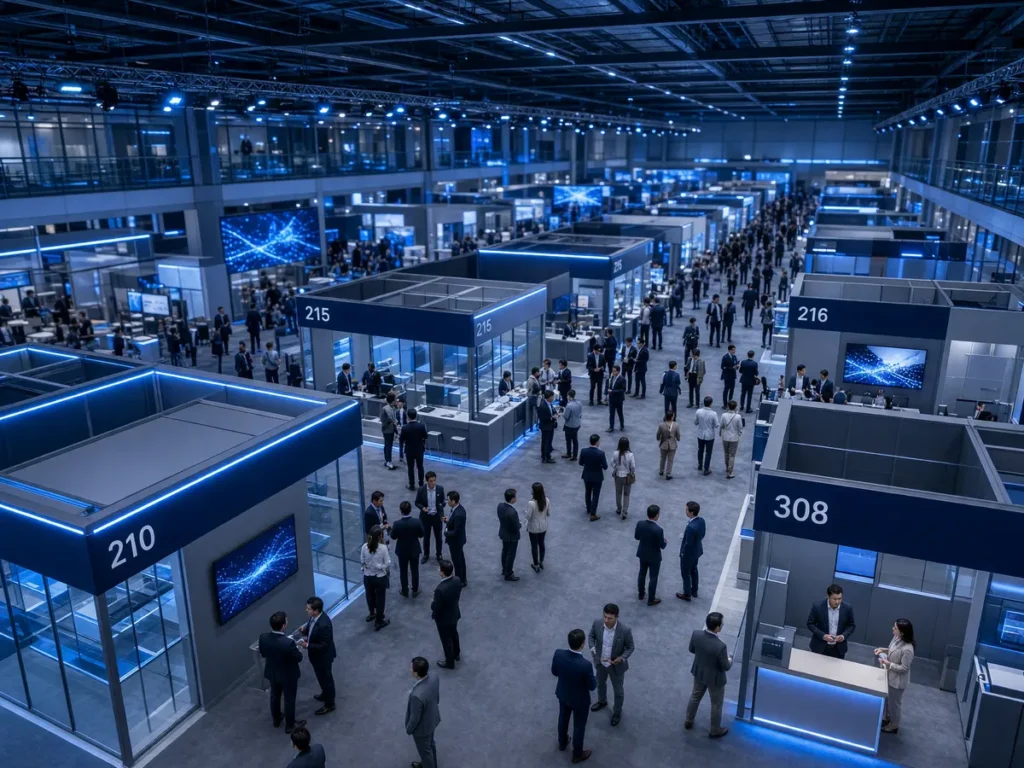
SiGMA World is one of the iGaming sector’s major recurring expos, a Malta-founded events brand that now runs large editions in several regions, with the 2026 European gathering held in Rome. The floor plan tells you who it serves: operator stands, game studios, platform and payment providers, affiliate networks, compliance consultancies, and regulators who speak on panels or take meetings quietly on the sidelines.
If you want the headline attendance and exhibitor figures, take them from SiGMA’s own published event data rather than from secondary coverage, because organiser numbers get rounded up and recycled for years. What is worth knowing is the function. A week like this compresses months of commercial conversation into four days. Deals that would take a quarter of emails get agreed over a coffee, which is precisely why executives go.
Nordic Network’s Rome line-up, as confirmed
Nordic Network Ltd confirmed five members of its senior leadership team for SiGMA World 2026: Co-founder and Group CEO Håvard Lehn, Fabian Broich, Director of Nordic Partners Gaming, Anders Abrahamsen, Head of External Partnerships, Anders Loe, Affiliate Manager, and Victoria Kalemis, Head of Finance.
The group said the team will meet operators, affiliates and partners, with discussion covering its affiliate business and Nordic Partners Gaming’s stated mission of connecting licensed iGaming companies with esports organisations and gaming creators. The company also recently acquired a Counter-Strike 2 team ranked number 131 in the world, with a stated aim of moving it into the top 50. Lehn described SiGMA World as one of the most important weeks in the group’s calendar, the place to sit down face to face with existing partners and meet prospective ones.
That is the whole of the confirmed record. Anything beyond it, about strategy, market entry or how the business treats customers, is inference, and you should treat it as such.
The real business of iGaming conferences
Four things reliably happen at iGaming conferences, and only one of them is visible to the public: partnership deals, compliance conversations, product launches and recruitment. Players see the press releases. The industry sees the meetings behind them.
Deal-making between operators and suppliers
Most of the value is contractual. An operator needs more game content; a studio needs distribution in a market where it has no commercial foothold. A platform provider wants to replace a rival’s integration. Affiliate groups, which is Nordic Network’s side of the business, negotiate the traffic arrangements that bring players to casino sites in the first place. When you later notice a new provider’s slots appearing in a casino lobby, there is a decent chance the paperwork started at an expo stand.
Regulation and compliance in the corridors
Regulators attend these events, speak on panels and meet licensees. Conversations cover licence conditions, advertising rules, anti-money-laundering obligations and the growing patchwork of national frameworks. For companies, this is partly intelligence gathering: knowing which market is about to open, tighten, or close. The sweepstakes model in the United States is a good illustration of how quickly a legal footing can vanish, and how regulators have moved against sweepstakes casinos shows why operators pay close attention to where rules are heading.
Product and technology launches
The innovation on show is mostly infrastructure rather than anything a player would call exciting: payment rails and faster withdrawal processing, platform and data tools, loyalty systems, live studio formats, and increasingly the responsible-gambling tech stack, meaning affordability checks, behavioural monitoring and self-exclusion integrations. Game studios launch titles and announce the licensed markets they are entering, a pattern visible in deals like Kendoo’s push into Belgium’s regulated market with Starcasino.
Where marketing visibility stops and transparency starts
Conference presence is a visibility signal, bought with a stand fee, and it carries no information about licensing, audited fairness or how an operator handles a disputed withdrawal. Any company with a budget can exhibit. Companies that later lose licences have exhibited. The stand says the marketing department is funded.
This is the gap worth holding onto. Transparency is a documentary claim: a licence number you can look up on a regulator’s register, a testing certificate you can verify with the lab that issued it, published return-to-player figures, terms that state withdrawal limits and processing times in plain language. A trade show appearance is none of those things. It is also not nothing, because sustained presence over years, visible senior staff and named partners are weak evidence of a going concern rather than a flip-by-night brand. Weak evidence is still weak. Do not price it as strong.
Industry news outlets, G3 Newswire included, are trade publications. They report what companies announce, accurately, to an audience of other companies. Reading them is useful. Reading them as consumer reviews is a category error.
The checks that actually carry weight
Before depositing anywhere, verify five things yourself, in this order:
- The licence, by name and number. Find the regulator stated in the site footer, open that regulator’s own register, and confirm the licence is current and held by the company named in the terms. Indian players will usually be dealing with offshore licences, so check which authority it is and what recourse it actually offers.
- Independent testing. Look for certification from a recognised laboratory such as eCOGRA, iTech Labs or Gaming Laboratories International, then confirm the certificate on the lab’s own site. A logo pasted into a footer is not a certificate.
- Published payout data. Reputable operators publish RTP figures per game, and some publish audited monthly payout percentages. Remember what RTP is: a long-run average across millions of rounds, with the remainder being the house edge. A 96% RTP game keeps 4% of total wagers over time, whatever happens in your session.
- Responsible-gambling controls. Deposit, loss and session limits, reality checks, cool-off periods and self-exclusion should be findable in the account settings in under a minute, not buried in a help article.
- Withdrawal terms. Read the cashout section before the bonus section: identity verification requirements, minimum and maximum withdrawal amounts, processing times, and any wagering requirement still attached to your balance. A 30x requirement on a ₹1,000 bonus means ₹30,000 wagered before that money is yours to take out.
None of those checks take long. All of them outrank every press release you will ever read.
Reading industry news without over-reading it
Following iGaming conferences and trade coverage is genuinely useful to a player, as long as you use it for context and not for trust. Over a year or two it tells you which markets are being regulated, which suppliers are consolidating, which payment methods are being adopted, and which operators keep appearing alongside licensed partners. That background makes you harder to impress with marketing and quicker to notice when something has changed, such as a brand switching platforms or disappearing from a regulator’s register.
What it will never do is replace verification. Choose an operator on a licence you have looked up, testing you have confirmed, terms you have read and safety tools you have found, then set your deposit and loss limits before your first spin. Every game on the floor in Rome, and every game in the lobby you play tonight, is built to return less than it takes over time. The companies at the expo know their edge precisely. Knowing yours means knowing what you are prepared to lose, and if gambling has stopped feeling like a cost you chose, use the self-exclusion tools or contact a support service in your region.