

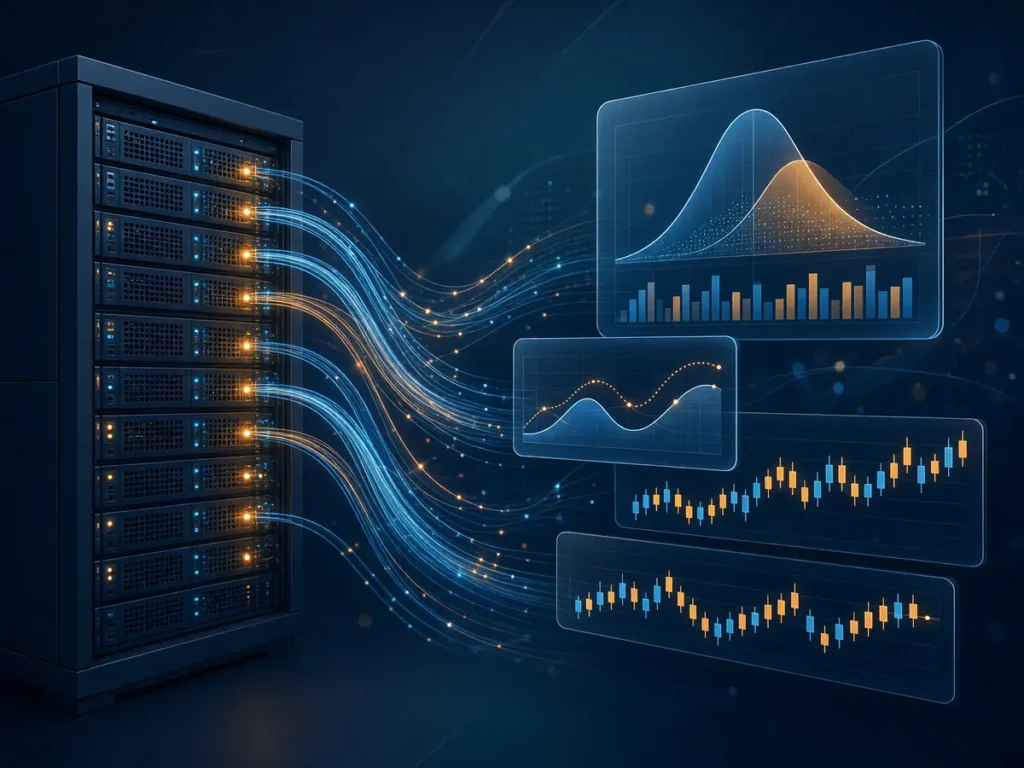
A $3.5 million seed round for plumbing, not a betting app
If two different venues both list a market on the Federal Reserve cutting rates, are you looking at the same bet twice or two genuinely different contracts? That question is the entire business case behind Furnace, a prediction market infrastructure provider that has emerged from stealth with a $3.5 million seed round.
Furnace is not building a place to trade. It describes itself as “the reference layer for prediction markets,” giving economic exposures persistent canonical identities and mapping venue-specific contracts to them. The stated customers are institutions and developers: hedge funds, prime brokers, proprietary trading desks, and people building applications on top of existing market platforms. The only documented integration so far is Polymarket, described as the first one; other venues such as Kalshi and Manifold sit on the roadmap rather than being confirmed as covered. The technology is delivered through direct integration or APIs.
The backers listed on the company’s site are North Island Ventures, Reciprocal Ventures, Reverie and VanEck, with angel investment from Commonweal, DTCC and Public.com. For a seed round in a retail-facing-sounding sector, that is a conspicuously institutional cast.
The problem: the same event, three incompatible contracts
Fragmented contract terms are the operational friction Furnace is targeting. One exchange might list a contract on the Fed lowering rates before the end of 2026. A second lists a cut by the end of a specific month. A third lists rates being lowered with no timeframe attached at all. Economically, these overlap. Legally and in terms of resolution, they do not.
Furnace’s pitch is that its system works out which contracts are substantially the same exposure and which are materially different, while keeping each venue’s instrument distinct with its own terms and resolution details. Siff, writing on LinkedIn, framed the gap plainly: prediction markets are becoming a real part of the financial system but are developing without the common identifiers and reference data institutions rely on in other markets.
That is a real problem, and it is a narrow one. Reference data is one slice of what the word “infrastructure” covers.
Why capital is flowing to back ends now
Money follows the institutional push. The sector has spent the past stretch trying to broaden its base beyond retail-heavy event and sports derivatives: Polymarket has hired senior talent out of traditional finance, and exchange operators have been routing new event-contract products through mainstream brokerages. Institutions bring volume, and volume breaks things that retail flow never stressed.
Prediction markets’ growing mainstream profile
For most of the past decade, fintech gambling startups raised money on the front end: slicker apps, cheaper acquisition, better onboarding. Furnace’s round sits in a different category. Nobody writes a cheque for canonical identifiers unless they expect someone to need canonical identifiers at scale. The presence of DTCC, whose day job is post-trade infrastructure in conventional securities markets, as an angel investor is the clearest signal in the whole announcement. It suggests the people who build market plumbing for a living think event contracts are heading somewhere that requires plumbing.
What “prediction market infrastructure” actually covers
Prediction market infrastructure is the back-end technology that lets event contracts be priced, traded, settled and reported. In practice it spans four layers: order-matching and market-making engines, settlement and oracle data that determines which outcome actually happened, scalable APIs for integrators, and the uptime and regulatory compliance systems that keep the venue live and licensable.
Reference data, Furnace’s layer, sits across all four. It is what tells a risk system that a position on one venue hedges a position on another. Without it, a desk running exposure across multiple exchanges is reconciling contract wording by hand, which is both slow and a good way to discover you were not hedged at all.
Event contract trading tech differs from a sportsbook’s stack in one structural way worth holding onto: a sportsbook sets a price and takes the other side, while a prediction market matches buyers and sellers continuously and takes a fee. The first problem is pricing risk. The second is matching, liquidity and resolution.
What better back-end tech could do for the person placing the bet
Here is where most coverage of betting platform investment stretches further than the evidence allows. The honest version: a seed round for an institutional reference layer tells you investors expect this market to grow up. It does not tell you that your next trade will clear faster.
In theory, and the hedge is doing real work in that phrase, deeper institutional participation and cleaner back-end tooling point in a few directions that bettors would feel:
- More market makers quoting more markets, which tends to tighten spreads and reduce slippage on larger orders
- Fewer outages when a single event, an election night or a Fed decision, drives everyone to the same market at the same minute
- Faster and less disputed settlement, because resolution criteria are documented and machine-readable rather than argued about afterwards
- Clearer comparison across venues, if normalised contract data eventually reaches retail interfaces rather than staying inside institutional risk systems
Every one of those is a plausible second-order effect of the sector maturing, not a thing Furnace has promised to deliver to retail users. Its stated audience is institutions and developers. Retail benefits, if they arrive, arrive indirectly and later. Anyone telling you a $3.5 million seed round will fix a platform’s election-night uptime is selling you an inference as a fact.
Liquidity, market making and the resolution question
Two features of prediction market technology explain why it needs its own tooling rather than borrowed sportsbook tech.
Liquidity is the first. Fixed-odds books guarantee you a price because the operator is the counterparty. On an exchange, your fill depends on someone being there to take the other side. Thin markets mean wide spreads and real slippage, and the fix is infrastructure that makes it cheap for professional market makers to quote. That is a technology problem before it is a demand problem.
Resolution is the second, and it is messier. A football result is unambiguous and arrives from a known feed. “Did the Fed lower rates before year end” depends on wording, source and timing, which is precisely why three venues can write three different contracts on one event. Oracle and settlement design is where prediction markets carry risk that sportsbooks simply do not. If you want the structural comparison in full, our explainer on how prediction markets differ from traditional sports betting covers the mechanics.
Watch delivery, and watch the regulators
Expect more infrastructure rounds. The pattern in maturing markets is that capital moves from applications to the layers underneath them, and prediction markets are visibly at that stage. The useful question is not how many announcements follow, but whether anything verifiable follows the announcements: published uptime, documented resolution criteria, transparency reporting that an outsider can check. In Furnace’s case, the first thing to watch is whether the roadmap venues actually become live integrations.
The other variable is regulatory. Event contracts currently sit under a different rulebook from licensed sportsbooks, and that asymmetry is already drawing attention, as the ongoing scrutiny of draft contracts and the sportsbook regulation gap shows. Institutional money tends to accelerate that attention rather than defuse it. Better plumbing changes how reliably a market runs; it does not settle whether regulators think it should be running that way at all.
And none of it changes the arithmetic of the position you take. Tighter spreads lower your cost of trading. They do not make a contract a good bet. Set limits, trade only what you can afford to lose, and use the self-exclusion and deposit tools the venues now offer.