

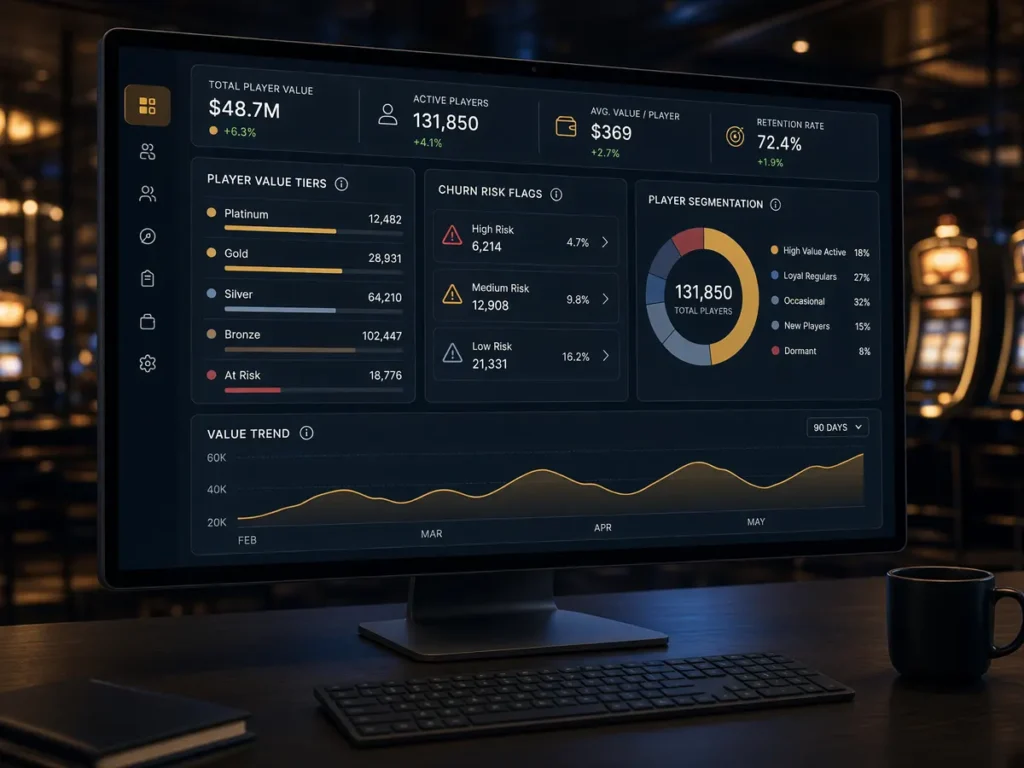
Seventy-one per cent of VIP professionals work with player data spread across disconnected systems. That figure comes from a survey by The Playa, the company that has just launched VIP Intelligence, described in its press release as the first standalone iGaming VIP management tool built specifically for VIP teams. The audience is narrow and senior: VIP hosts, retention leads and the operators who sign off on their budgets.
The launch is a useful excuse to look at something the industry talks around rather than about. High-roller programs generate a disproportionate share of revenue at most casino operators, and they are still run, in a lot of places, on a mixture of spreadsheets, WhatsApp threads and one host’s memory. Whether a dedicated product fixes that depends on what you think the actual problem is, and most coverage gets that part wrong.
What The Playa actually announced
VIP Intelligence is an AI-powered platform built for the full VIP lifecycle, from identifying players with VIP potential to retaining existing ones, according to the press release reported by Focus Gaming News in mid-October. Two capabilities are named specifically: High-Value Player Detection, which the company says identifies VIP potential within a player’s first 24 hours, and at-risk flagging that surfaces players before they go inactive.
That is the extent of the publicly stated detail. Pricing, integration scope, model methodology and the composition of the survey sample are not in the source material, and nobody writing about this product can honestly fill those gaps. The “first” claim is The Playa’s own framing: the first standalone product for VIP management, as distinct from VIP modules inside broader CRM and platform suites, which have existed for years.
Myth one: VIP teams are flying blind
VIP teams are not short of data. They are short of a single place to read it. The 71 per cent figure describes fragmentation, not absence, and the distinction matters because it changes what a tool has to do. A host at a mid-size operator typically has access to the platform back office, the payments dashboard, the bonus engine, a BI report that refreshes overnight, and a chat history. Everything needed to understand a player exists. Reconstructing it takes twenty minutes per player, which is fine for a book of thirty and impossible for a book of three hundred.
Generic CRM and player retention software was built for the opposite problem: large populations, small individual value, campaigns rather than conversations. It segments by behaviour, triggers lifecycle emails and measures open rates. None of that maps onto a relationship where one person’s monthly net deposit can exceed a mass-market cohort of several thousand. VIP work is case management with a revenue number attached, and mass-market retention tools have no concept of a case.
Myth two: hosts run on gut feel
Experienced hosts are usually right about their players, and that is exactly the problem. Intuition built over years of calls and comped dinners is genuinely good at reading a specific player, but it does not scale, does not transfer when the host leaves, and cannot be audited by a compliance officer six months later. The argument for dedicated tooling is not that hosts guess badly. It is that an undocumented judgement is indistinguishable, from the outside, from no judgement at all.
How tiers and hosts work
Most high roller loyalty programs run on a tier ladder with human servicing layered on top of the upper rungs. Players earn comp points on turnover, points determine tier, and tier determines what the operator spends on them. Below a threshold, service is automated. Above it, a named host takes over, and the relationship becomes the product. Invite-only top tiers often sit outside the published ladder entirely, with qualification decided by the VIP team rather than a formula.
The table below is an illustrative structure, not data from any named operator, showing how servicing typically changes as a player moves up:
| Tier band | How players qualify | Servicing model | Typical benefits |
|---|---|---|---|
| Entry loyalty | Published points threshold | Automated, mass CRM | Comp points, standard reloads |
| Mid tiers | Published thresholds, periodic review | Shared host pool | Higher comp rate, faster withdrawals, birthday offers |
| Upper tiers | Thresholds plus manual review | Named host, direct channel | Tailored bonuses, cashback, raised limits |
| Invite only | VIP team discretion | Dedicated host, concierge | Event invitations, gifts, bespoke terms |
What the perks are actually for
Comps are a cost of retention priced against expected future value, not a reward for past play, whatever the marketing says. Personalised bonuses, raised deposit and withdrawal limits, sports hospitality, gifts and closed events all exist to raise switching costs in a market where a competitor is one app download away. The same logic has been reshaping land-based programs, where casino loyalty technology has moved from fixed kiosks to mobile tools that follow the player.
The signals a VIP desk actually watches
VIP teams track value, direction of travel and risk, usually in that order. Predicted lifetime value sets the servicing budget. Deposit frequency, average stake and session cadence show whether a player is ramping up or cooling off. RFM analysis, recency, frequency and monetary value, remains the workhorse segmentation behind most of it. Churn risk is the one that drives daily behaviour: a drop in session count or a missed weekly deposit pattern is the signal a host wants on the morning of day three, not in next month’s report.
What a purpose-built platform adds operationally is consolidation plus timing. Instead of a host noticing a quiet player, the system flags them. Instead of VIP identification happening after a player’s third big deposit, early detection proposes candidates within the first day. That is a genuine shift in who makes the first move. It is also a prediction rather than a fact, and a 24-hour signal is built on very little history: a new account that deposits heavily on day one might be a long-term high-value player, or someone who will never deposit again, or someone whose spending needs a different kind of attention entirely. Treating a probabilistic flag as a verdict is how VIP programs acquire problems.
Myth three: faster targeting means a better VIP experience
Faster personalisation improves the VIP player experience in the obvious ways and creates one real hazard. Players get relevant offers while they still matter, host attention becomes consistent rather than dependent on which account manager is on shift, and recognition arrives before a player has had to ask for it. That is a better product.
The hazard is aiming an always-on targeting engine at the people who spend most. Rapid escalation of deposits, unusual session length and chasing behaviour are signals of value and signals of harm at the same time, read from the same data. Any operator deploying automated high-value flagging should run affordability and harm checks on the same pipeline, keep deposit and loss limits available and enforced inside VIP accounts, and make sure a host’s incentive structure does not reward pushing a flagged player harder. Players who need support should be able to find a legitimate problem gambling support service rather than another offer. Regulators in several markets have already fined operators specifically over VIP handling, which is the compliance context any tool of this kind now ships into.
What to interrogate before buying
Operators evaluating a dedicated VIP platform should press hardest on integration depth, because that is where this category usually fails. Specific questions worth asking: does it read the platform, payments and bonus systems in real time or on a nightly batch; can it write actions back, or does it only produce lists; how are model outputs explained to a host and to an auditor; what happens to the segmentation when a market’s bonus rules change; and does it carry responsible-gambling and affordability signals alongside value signals, or does value sit alone.
The more interesting question the launch raises is whether VIP management is becoming a software category in its own right, the way sportsbook trading and fraud detection did before it. A standalone product only makes commercial sense if enough operators are willing to buy outside their platform suite. Whether VIP Intelligence sells, and whether platform providers respond by deepening their own VIP modules, will tell us more about where this goes than any launch release will.